Chemistry Careers : Why Chemistry Opens More Doors Than You’d Think
What if struggling with chemistry now doesn’t close doors to your future? For students aged 14 to 16, understanding chemistry’s reach can transform it from an intimidating subject into a gateway to exciting careers.

The chemical sciences workforce is projected to grow 30% faster than the overall UK labour market through 2032.
From medicinal chemists earning £40,000 to £60,000 with experience to forensic scientists solving crimes, chemistry opens pathways across healthcare, justice, environmental science, and technology.
The beauty of chemistry lies not just in understanding how the world works
at a molecular level but in applying that knowledge to solve real problems. Whether you dream of developing life-saving medicines, protecting the environment, solving crimes, or pioneering new technologies, chemistry provides the foundation.
Whether you dream of developing life-saving medicines, protecting the environment, solving crimes, or pioneering new technologies, chemistry provides the foundation.
For parents who are concerned about their children’s academic performance and future prospects, understanding the wide-reaching applications of chemistry can be a game-changer.
Why Chemistry Opens Career Doors
Chemistry sits at the intersection of biology, physics, engineering, and medicine. This versatility means a strong chemistry background doesn’t limit you to one career path.

The job market reflects this demand. Chemical scientists in the UK earn a median salary of £38,590, which is £7,500 more than the national median for other professions. The chemical sciences workforce is projected to grow 30 per cent faster than the overall UK labour market through 2032. For students considering their educational paths, these numbers tell a clear story about chemistry’s value in the job market.
Entry-level positions for chemistry graduates typically start around £25,000 to £26,000 annually, with substantial growth potential. Experienced chemists can earn between £30,000 and £45,000, whilst specialised roles in fields like patent law or senior pharmaceutical positions can command salaries exceeding £80,000.
Multiple Pathways Into Chemistry Careers
Not everyone takes the traditional university route, and that’s perfectly fine. The UK offers several pathways into chemistry careers, each with distinct advantages.

T-Levels provide a technical alternative to A-levels for students aged 16 to 19.
These two-year qualifications are equivalent to three A-levels and focus heavily on practical skills.
T-Level students spend 80 per cent of their time in classroom learning and 20 per cent in industry placements lasting at least 45 days.
The Science T-Level specifically prepares students for laboratory technician roles, quality control positions, and further study. Upon completion, students can progress to skilled employment, university, or higher-level apprenticeships.
Apprenticeships offer the chance to earn whilst learning.
Chemistry apprenticeships allow you to work for a company whilst studying towards qualifications, typically requiring five GCSEs in chemistry, maths, or science at grade C or above.
Major companies like AstraZeneca, BASF, and smaller firms across the UK actively recruit apprentices. Many apprentices progress to senior roles within their companies, and some even complete degree-level qualifications through their apprenticeship programmes.
These alternative routes address a critical skills gap in the technician workforce. Companies value apprentices and T-Level graduates because they develop practical skills alongside theoretical knowledge and tend to stay with employers longer than university graduates in similar technical roles.
Traditional University Route remains the most common pathway for research and development roles. Most chemistry careers require at least a bachelor’s degree in chemistry or a related field. Around 21.5 per cent of chemistry graduates pursue master’s degrees, PhDs, or professional qualifications.
Understanding that each pathway suits different circumstances and goals helps students make informed decisions about their futures.
“Remember to look up at the stars and not down at your feet.”
—Stephen Hawking
Healthcare and Pharmaceuticals: Saving Lives Through Chemistry
Chemistry is essential for anyone pursuing medicine, dentistry, or pharmacy.
In the UK, 24 out of roughly 40 medical schools require A-level Chemistry, making it a common prerequisite for medical education.
The subject provides crucial understanding of human biology, drug interactions, and disease mechanisms.
Medicinal Chemists design and develop new drugs to treat diseases.
On a typical morning, a medicinal chemist might analyse results from previous experiments to identify which compounds showed promise in biological testing. Mid-morning involves designing new molecular structures based on those results, considering how chemical modifications might improve effectiveness or reduce side effects.
The afternoon often includes laboratory work, synthesising new compounds using techniques like reflux, distillation, and chromatography. Between lab sessions, medicinal chemists attend team meetings to discuss project progress, review data with biologists, and plan next steps.
The work combines creativity with rigorous methodology. One medicinal chemist described the satisfaction of seeing a compound you designed successfully progress through testing stages, knowing it might eventually help patients.
Starting salaries for pharmaceutical chemists range from £25,000 to £35,000, progressing to £40,000 to £60,000 with experience.
However, advancing to senior research positions typically requires a PhD, representing four years of intensive study beyond an undergraduate degree. Research positions can be competitive, particularly in academic settings, and many pharmaceutical jobs are concentrated in specific geographic areas.
Pharmacologists research how drugs and chemicals affect living organisms.
They investigate everything from how medications interact with cellular processes to understanding side effects and optimal dosages.
Senior pharmacology positions can offer salaries exceeding £80,000, reflecting the critical nature of this work in developing safe, effective treatments.

Biochemists study chemical processes within living organisms, contributing to breakthroughs in genetics, medicine, and biotechnology.
Their typical day involves preparing samples, running experiments on proteins or DNA, analysing data using specialised software, and documenting their findings in laboratory notebooks.
They might spend mornings setting up experiments, afternoons monitoring equipment like mass spectrometers or centrifuges, and evenings analysing results. UK biochemists typically earn between £28,000 and £45,000, with research scientists at pharmaceutical companies commanding higher salaries.
Forensic Chemistry: Justice Through Science
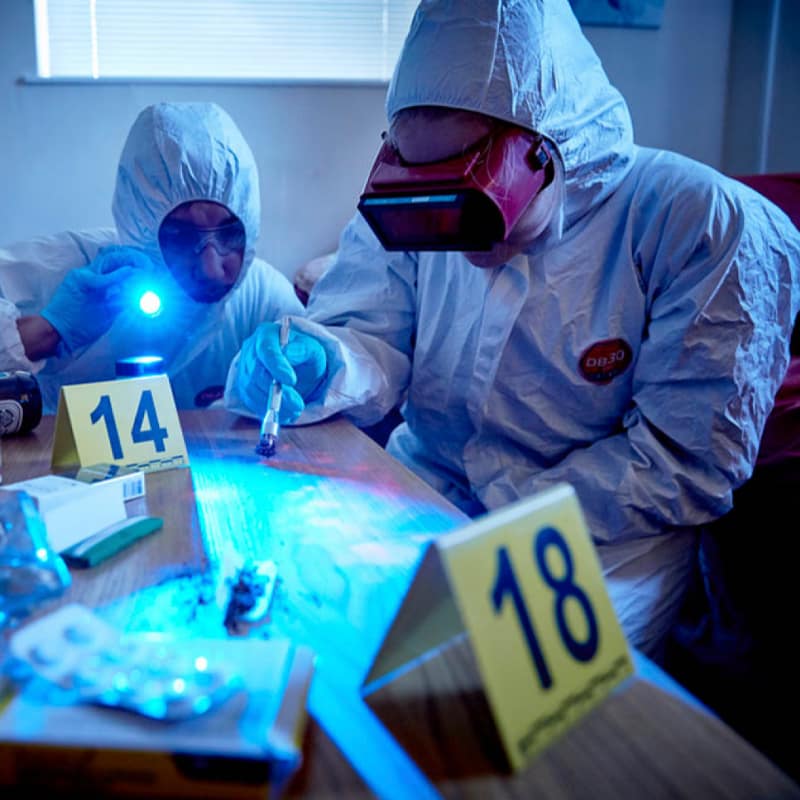
Picture arriving at work to find evidence from an overnight crime scene awaiting analysis.
A forensic chemist’s morning might begin examining a suspicious white powder using preliminary tests, followed by more sophisticated analysis with gas chromatography and mass spectrometry to identify whether it’s an illegal substance.
Afternoons often involve writing detailed reports documenting every step
of the analysis, because these reports might be scrutinised in court.
Forensic chemists apply chemistry to criminal investigations, analysing physical evidence from crime scenes to help solve crimes and support the justice system. They examine everything from drugs and explosives to trace evidence like paint chips, glass fragments, and chemical residues.
One forensic chemist described the meticulous nature of the work. You might spend hours on a single sample, ensuring your analysis is absolutely correct because someone’s freedom might depend on your findings. The role requires exceptional attention to detail and the ability to explain complex scientific procedures clearly to judges and juries who lack scientific backgrounds.
Around 90 per cent of forensic chemists work for federal, state, or local police departments, medical examiner offices, or agencies like the FBI. The role demands patience and precision, as forensic chemists must carefully document every analysis step and defend their findings under cross-examination in court.
This career path typically requires a bachelor’s degree in chemistry or forensic science, with many positions preferring a master’s degree. Forensic scientists in the UK earn between £27,000 and £35,000, with government positions offering competitive benefits and advancement opportunities.
Environmental Science: Protecting Our Planet
Environmental scientists with chemistry backgrounds tackle some of the most pressing challenges facing our world.
Their work varies dramatically from week to week. One week might involve fieldwork collecting water samples from rivers to test for pollutants. The next week could be spent in the laboratory analysing those samples using techniques like atomic absorption spectroscopy or ion chromatography.

Another week might focus on writing reports for environmental agencies or advising companies on reducing their carbon emissions.
Their work varies dramatically from week to week. One week might involve fieldwork collecting water samples from rivers to test for pollutants. The next week could be spent in the laboratory analysing those samples using techniques like atomic absorption spectroscopy or ion chromatography. Another week might focus on writing reports for environmental agencies or advising companies on reducing their carbon emissions.
These professionals monitor pollution levels, assess environmental damage, develop solutions to reduce carbon emissions, and work to protect ecosystems from human activity. Chemistry knowledge is crucial for understanding atmospheric composition, water quality, soil chemistry, and how pollutants affect living organisms.
With growing concerns about climate change and environmental protection, demand for environmental scientists continues to rise. They work for government agencies like the Environment Agency, consulting firms, research institutions, and private companies seeking to reduce their environmental footprint.
Agricultural Chemistry: Feeding the World
Agricultural chemists work to improve food production sustainably.
They develop and test fertilisers and pesticides, analyse soil composition, investigate how chemicals affect crop yields, and research methods to enhance agricultural productivity whilst minimising environmental impact.
Their work involves understanding plant chemistry, soil science, and the complex interactions between agricultural chemicals and ecosystems.
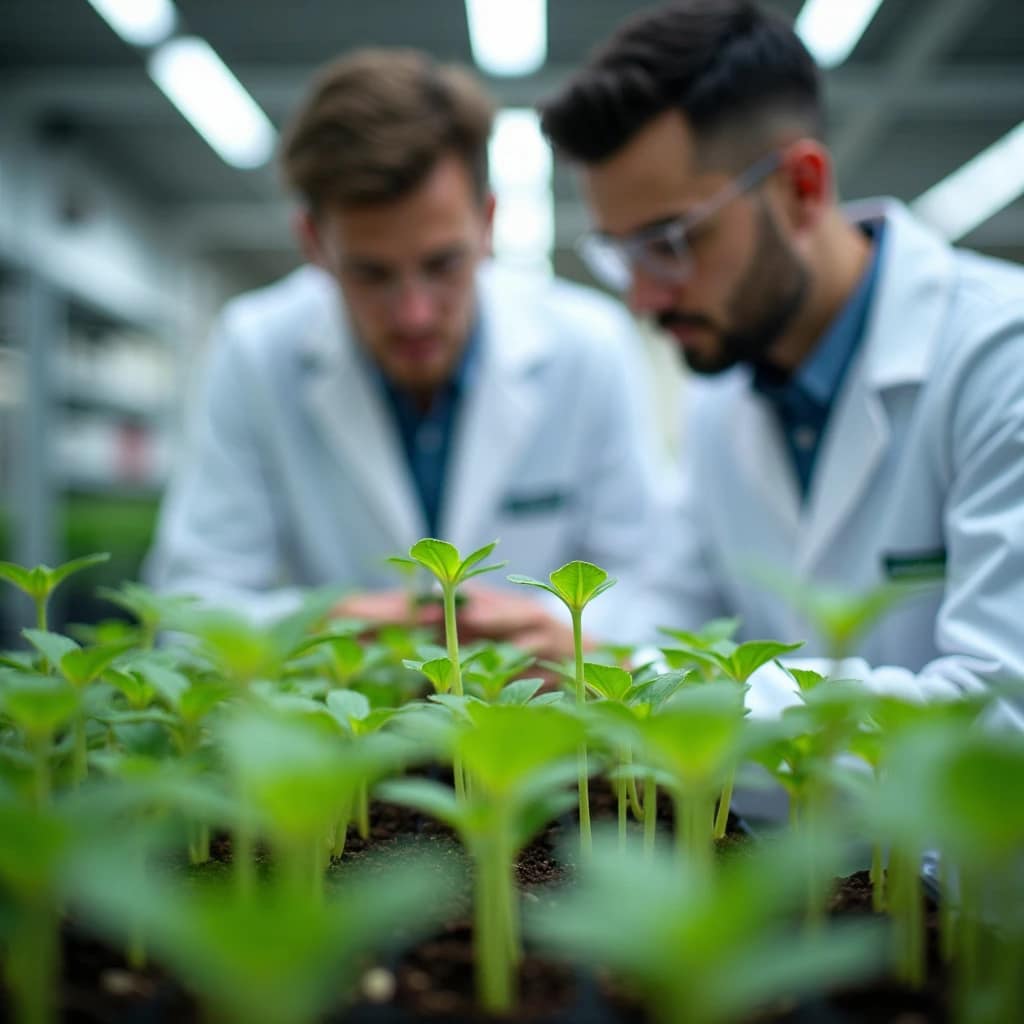
Agricultural chemists might research how to make crops more resistant to disease or drought, develop safer pesticides, or find ways to increase nutritional content in food crops.
This field combines laboratory research with fieldwork, requiring practical problem-solving and a commitment to sustainable farming practices. Positions are available with agricultural companies, government research bodies, and food production companies.
Cutting Edge Science: Materials and Nanotechnology
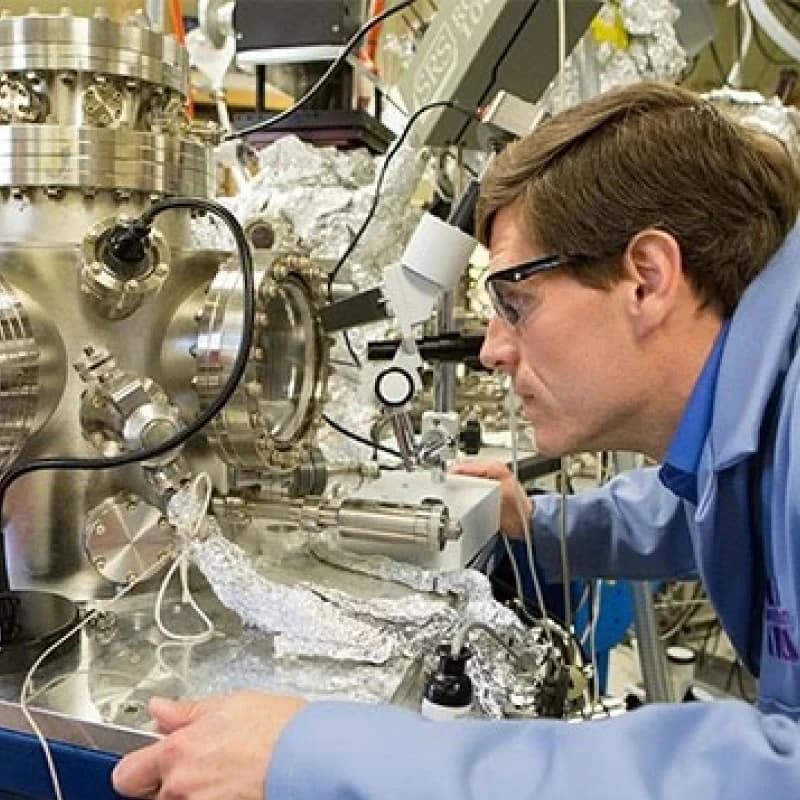
Materials Scientists research and develop new materials with specific properties for use in electronics, construction, aerospace, and consumer products.
A typical workday might involve using electron microscopes to examine material structures at the atomic level, testing how materials perform under different temperatures or stresses, analysing data to understand material properties, and collaborating with engineers to apply discoveries to real-world products.
A typical workday might involve using electron microscopes to examine material structures at the atomic level, testing how materials perform under different temperatures or stresses, analysing data to understand material properties, and collaborating with engineers to apply discoveries to real-world products.
This field is particularly exciting because materials scientists often work on cutting-edge technology, developing lighter materials for aircraft, more efficient solar panels, or new battery technologies for electric vehicles. They contribute to innovations that shape our technological future.
Entry-level positions start around £30,000, with experienced materials scientists earning £45,000 to £60,000 or more.
Nanochemists work with materials at the nanoscale (1 x 10⁻⁹ m), manipulating atoms and molecules at dimensions between 1 and 100 nanometres to create materials with unique properties. Their research leads to advances in medicine, electronics, and environmental technology.
Nanotechnology applications include targeted drug delivery systems that can direct medication precisely to diseased cells, more efficient electronic components, and materials that can clean up environmental contaminants.
The Reality: Challenges and Considerations
Whilst chemistry offers exciting opportunities, students deserve an honest picture of the field.
High-level research positions typically require a PhD, representing a significant investment of time. A PhD programme usually takes three to four years beyond a bachelor’s degree, during which students conduct original research whilst living on a modest stipend. T
The work can be demanding, with experiments sometimes failing repeatedly before achieving success.

Competition for pure research positions, particularly in academia, can be intense. Many chemistry graduates compete for limited postdoctoral positions at universities. Job listings for postdoctoral research associates typically receive dozens of qualified applicants.
Geographic considerations matter too. Many pharmaceutical and biotechnology companies concentrate in specific regions, particularly the “golden triangle” between Cambridge, Oxford, and London.
Scotland has a strong life sciences presence with approximately 40,000 people working in the sector, but opportunities elsewhere in the UK can be more limited. This geographic concentration often means considering relocation for career advancement.
Laboratory work itself demands patience. Research chemists often describe spending weeks or months on experiments that don’t produce expected results.
One development chemist noted that the most challenging aspect is developing processes that are not only scientifically sound but also scalable, economical, and safe for manufacturing. Scientific research involves substantial trial and error, requiring resilience and persistence.
However, these challenges come with rewards. The same chemist described the deep satisfaction of solving a difficult problem after numerous attempts. When you finally develop a system that works, the sense of accomplishment makes the frustration worthwhile.
The Transferable Skills Chemistry Develops
Beyond specific chemistry knowledge, the subject develops skills that employers value across all industries. These transferable abilities make chemistry graduates attractive candidates even for roles outside traditional science fields.
Critical Thinking and Problem Solving: Chemistry teaches systematic approaches to complex problems. You learn to form hypotheses, design experiments to test them, analyse results, and draw logical conclusions. This structured thinking applies to business challenges, technical troubleshooting, and strategic planning in any field.


Data Analysis: Modern chemistry involves handling large datasets, using statistical methods, and drawing meaningful conclusions from experimental results.
Chemists regularly use software to model molecular structures, analyse spectroscopic data, and interpret patterns.
These skills transfer directly to roles in finance, consulting, market research, and data science.
Attention to Detail: The precision required in chemistry experiments develops a meticulous approach to work. Whether measuring reactants, recording observations, or writing reports, accuracy matters.
One small error in measuring quantities or recording data can invalidate an entire experiment. This careful attention serves well in fields like quality control, regulatory compliance, and project management.
Technical Proficiency: Chemistry increasingly relies on sophisticated instruments and software for modelling, data analysis, and experimentation. Students gain comfort with technology that translates to broader technical competence in the workplace.
Operating equipment like nuclear magnetic resonance spectrometers, mass spectrometers, and chromatography systems develops confidence with complex technology.
Communication Skills: Chemistry students learn to explain complex concepts clearly, both in writing and verbally.
They present findings, write technical reports, and collaborate with team members. Laboratory work often involves teamwork, with students working in pairs or groups to complete experiments, teaching them to coordinate efforts and communicate effectively.

These communication abilities are essential in any profession, from teaching to business management.
Getting Started: Educational Pathways
For students in Years 10 and 11, focusing on chemistry means building a strong foundation in science and mathematics. A-level Chemistry is typically required for chemistry-related degree programmes and medical school, though specific requirements vary by university and course.

Most chemistry careers require at least a bachelor’s degree in chemistry or a related field. Many research positions, university teaching roles, and senior positions in industry require postgraduate qualifications.
Around 21.5 per cent of chemistry graduates pursue master’s degrees, PhDs, or professional qualifications like teaching certificates.
The good news is that chemistry opens multiple pathways. If you discover a passion for a particular application, whether medicine, environmental science, or materials engineering, you can specialise through your degree choices and further study.
Apprenticeships and T-Levels provide alternative routes that combine earning money with gaining qualifications. These paths are particularly valuable for students who learn best through hands-on experience or who want to avoid accumulating student debt whilst building their careers.
Taking Action Now
You don’t need to wait until university to explore chemistry careers.
Look for opportunities to engage with the subject beyond the classroom. Science clubs, chemistry competitions like the Royal Society of Chemistry’s competitions, and online resources can deepen your understanding and help you discover what aspects interest you most.
Consider reaching out to professionals in fields that intrigue you. Many scientists enjoy talking about their work and might offer insights into their career paths.
Work experience placements, even brief ones, provide invaluable glimpses into different chemistry-related careers. Some schools arrange visits to university laboratories or industrial facilities.
Remember that struggling with chemistry now doesn’t close doors for the future.
The subject is challenging, and that’s precisely why it’s valuable. Each concept you master and each problem you solve strengthens your analytical abilities and builds confidence in tackling difficult subjects.

One process development chemist who now works for a global scientific company,
started by struggling with undergraduate forensic science before eventually completing a PhD in organic chemistry!
Looking Forward
The world needs chemists!
From developing treatments for diseases to creating sustainable technologies, from solving crimes to protecting the environment, chemistry professionals make tangible differences in people’s lives.
Your curiosity about how things work at a molecular level could lead to a career that’s both intellectually rewarding and socially meaningful.
Chemistry isn’t just about memorising formulas or balancing equations
It’s about understanding
The field has its challenges. PhDs take years. Research positions can be competitive. Many jobs are concentrated in specific regions. Laboratory work requires patience through repeated failures. But these challenges come with profound rewards.
When you solve a problem that’s stumped you for weeks, when you develop a compound that might help patients, when you create a material that makes technology more efficient, the satisfaction runs deep.
Whether you take the traditional university route, pursue a T-Level, or enter through an apprenticeship, chemistry provides a solid foundation for countless careers. The skills you develop, the knowledge you gain, and the problems you learn to solve will serve you throughout your life, regardless of where your career ultimately leads.
For students struggling with Chemistry, remember that every challenge overcome is a step towards a brighter future. With the right support, such as the tutoring provided by MyChemistryClass.com, every student has the potential to excel in Chemistry and open doors to exciting future opportunities.
For parents, who value education and are concerned about their children’s future prospects, understanding these transferable skills can provide reassurance about the long-term benefits of studying Chemistry.
Parents can take heart in knowing that by supporting their children’s Chemistry education, they’re not just helping with immediate academic success but also investing in their long-term future.
The world needs more chemists, and who knows? Your child could be the one to make the next big scientific breakthrough!
Struggling with ChemistrY?
We Know You Want Better Grades.
www.mychemistryclass.com
Online Chemistry Tuition Yr 9 – 12
0 Comments