On a hot summer day, nothing beats biting into a cold, refreshing ice lolly. Have you ever seen how quickly they melt in your hand when it’s sunny?
But have you ever thought about how science works when ice lollies melt?
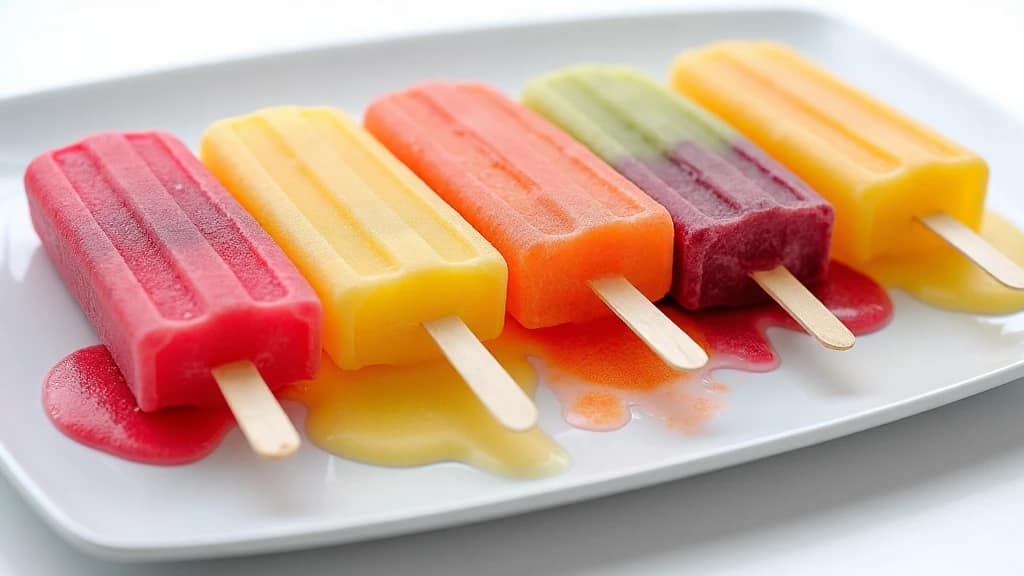
Ice lollies, often made primarily from water, sugar, and flavouring, melt significantly faster than ice cream due to their composition. Unlike ice cream, which contains fat and air, ice lollies are more uniform, meaning they lack the insulating properties that slow down melting.
The science behind it is simple. It’s about the state of matter changing from solid to liquid. Temperature is key, speeding up how fast ice lollies melt.
The Science of Melting: States of Matter
When you take an ice lolly out of the freezer, it’s solid. That’s because the water (and juice or flavourings) inside is frozen solid at low temperatures. Melting is a change from solid to liquid. This happens at the molecular level.
Solid to Liquid Transformation
As the lolly meets the warm summer air—or your warm hands—energy from the heat starts to flow into the lolly.
This happens at the molecular level. The extra energy – in the form of heat – makes the particles inside the ice lolly move faster and faster… until their bonds weaken and the molecules break free from their rigid pattern and the lolly turns from solid to liquid
Heat Transfer Basics
Heat is what makes things melt. There are three ways heat moves: conduction, convection, and radiation. For an ice lolly, conduction happens when it touches something warmer. Convection occurs when air around it carries heat to the lolly.
| Method | Description | Example |
|---|---|---|
| Conduction | Direct heat transfer between objects in contact | Holding an ice lolly in your hand |
| Convection | Heat transfer through the movement of fluids | Air circulating around the ice lolly |
| Radiation | Heat transfer via electromagnetic waves | Exposure to direct sunlight |
Freezing Point Depression Explained
Freezing point depression – When dissolved substances have been added to a liquid, the freezing point of a liquid is lowered. As an example pure water would be solid ice at 0o C however, if salt is added to water, the water would not form ice until the temperarture was around -20o C.
Hence, in ice lollies, the added sugars and other ingredients make them melt faster as the air temperature is much higher than the depressed freezing point. Knowing this helps makers create more stable frozen treats.
Understanding the science of melting is essential. It includes the solid-to-liquid transition, heat transfer basics, and freezing point depression. This knowledge helps us see the complex process of ice lolly melting.
Why Do Ice Lollies Melt So Fast?
Ice lollies melting quickly is a common problem on hot summer days. It’s not just annoying; it’s also about the science behind it. Ice lollies melt faster than other ice because of their makeup and how heat works.
The Physics Behind Rapid Melting
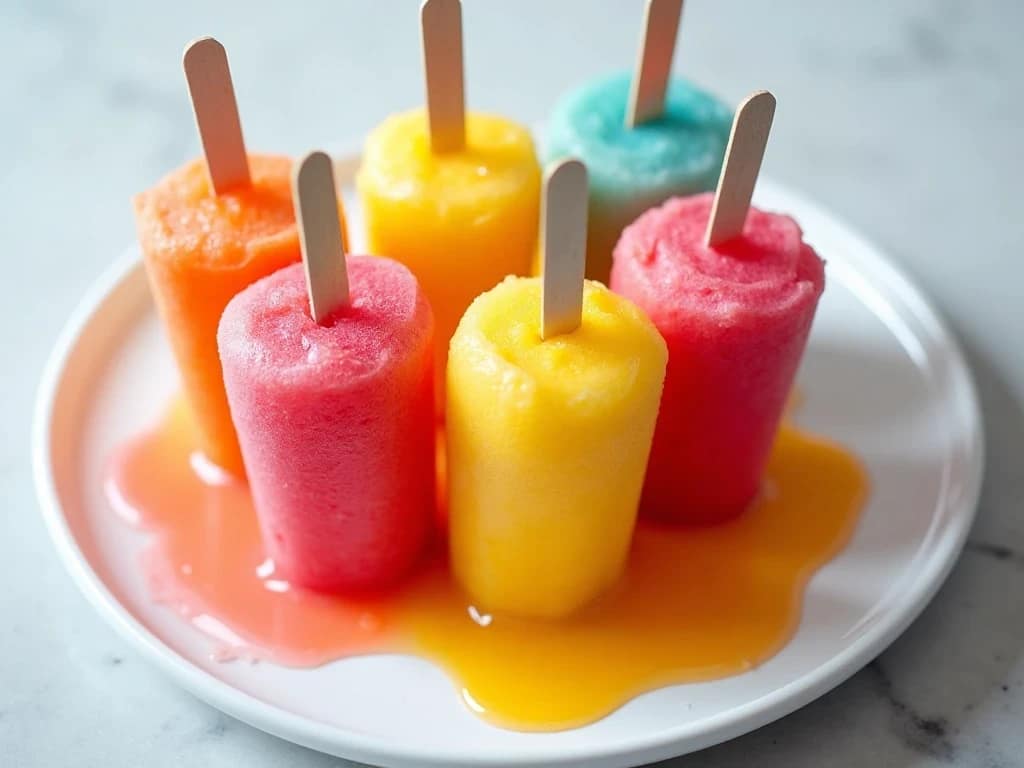
Ice lollies melting quickly is a common problem on hot summer days. It’s not just annoying; it’s also about the science behind it. Ice lollies melt faster than other ice because of their makeup and how heat works.
The stick holding the ice lolly also speeds up melting. It can carry heat from your hand to the ice. Plus, ice lollies have ingredients like sugar that make them melt faster.
Comparison to Regular Ice
Regular solid ice cubes melt slower than ice lollies. This is because an ice cube has less surface area compared to its volume. Ice lollies, being long and thin, have more surface area which makes them melt faster
The Role of Body Heat in Accelerating Melting
When you hold an ice lolly, your body heat makes it melt faster. The stick and your hand help transfer this heat. Your hand’s warmth, even through the stick, makes ice lollies melt quickly.
Knowing these reasons can help slow down ice lolly melting. You could try using different sticks or changing what’s in the ice lolly.
The Composition of Ice Lollies and Melting Points
Ice lollies are more than just frozen water. They are a mix of ingredients that change how they melt.
Sugar Content and Its Effects
Sugar is key in how fast ice lollies melt. Sugars lower the freezing point of water due to freezing point depression.
This means ice lollies with more sugar melt quicker because their freezing point is lower.
A study showed that more sugar in a solution lowers its freezing point. This is why ice lollies with fruit or lots of sugar are softer and melt faster.
The addition of sugars can significantly affect the texture and melting behavior of frozen desserts,” notes a food science expert. “Sugars not only contribute to the flavor but also play a crucial role in the physical properties of ice lollies.”
Dairy vs. Water-Based Popsicles
The type of base in an ice lolly, whether dairy (ice cream) or water, affects its melting speed. Dairy-based ice lollies have fats and proteins that slow down melting.
This makes dairy-based popsicles melt slower than water-based ones.
| Base Type | Melting Rate | Characteristics |
|---|---|---|
| Water-Based | Faster | Typically icier, less resistant to melting |
| Dairy-Based | Slower | Contains fats and proteins, creamier texture |
Stabilizers and Their Impact on Melting Rate
Food stabilizers are added to ice lollies to improve their texture and slow down melting.
Common ones include guar gum, xanthan gum, and carrageenan. These ingredients make the ice lolly more resistant to melting by improving its texture and structure.
For example, guar gum helps create a stable emulsion in dairy-based ice lollies, slowing down melting. Xanthan gum also improves viscosity, making the ice lolly less likely to melt.
Understanding the role of ingredients in ice lollies helps manufacturers create products that taste great and melt well.
They can adjust sugar content, choose between dairy and water bases, or add stabilizers. There’s a lot that goes into making ice lollies that melt just right.
Environmental Factors Affecting Melting Speed
Many things around us can change how fast ice lollies melt. Some situations are worse for melting ice lollies than others.
Effects of Temperature
The temperature around us is key to melting ice lollies. When it’s hotter, ice lollies melt quicker.
For example, on a very hot summer day, they melt faster than on a cooler day.
Humidity and Air Flow
Humidity and air flow also matter a lot. High humidity makes ice lollies stickier but melts them slower.
Air flow, however, can make ice lollies melt faster by bringing warm air to them.
Direct Sunlight Exposure Effects
| Factor | Effect On Melting |
|---|---|
| Direct Sunlight | Increases melting speed due to radiant heat |
| Darker Colors | Absorb more sunlight, melting faster |
| Lighter Colors | Reflect sunlight, melting slower |
The Role of Shape and Size in Melting Rate
The shape and size of ice lollies greatly affect how fast they melt.
The physical features of an ice lolly can change its melting speed when it gets warmer.
Surface Area to Volume Ratio
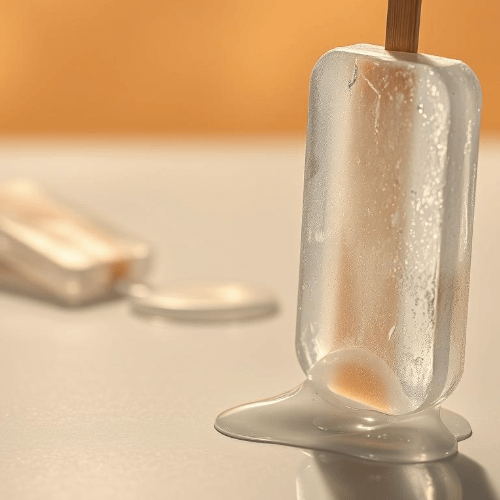
The surface area to volume ratio is a key factor in melting rates. This ratio shows how much of the ice lolly is in contact with the air. A higher ratio means more ice is touching warmer air, causing it to melt faster.
An ice lolly with a larger, flatter shape will melt quicker than a smaller, round one. This is because the larger shape has more surface area exposed.
Popular Ice Lolly Designs and Their Melting Properties
Different ice lolly designs melt at different rates. Traditional stick lollies melt at a moderate pace. Their cylindrical shape balances their surface area and volume.
On the other hand, novelty shapes with big surface areas melt faster. Their unique designs expose more of the ice
| Ice Lolly Design | Surface Area to Volume Ratio | Melting Rate |
|---|---|---|
| Cylindrical Stick Lolly | Moderate | Moderate |
| Flat, Wide Lolly | High | Fast |
| Compact, Spherical Lolly | Low | Slow |
Commercial Design Innovations to Slow Melting
Manufacturers have come up with new designs to slow down melting. They use specialized coatings to keep the ice cooler. These coatings help insulate the ice from the heat.
They also try out unique shapes that reduce the ice’s contact with the air. Shapes like spheres or encapsulated designs are good examples.
These new designs help ice lollies last longer. They also make the treat more enjoyable by keeping it cool for longer.
Storage Techniques to Slow Down Melting
Using the right storage methods can really help ice lollies stay frozen longer. It’s important to keep them from turning into a puddle too fast.
Optimal Freezer Settings
To keep ice lollies frozen, store them at the right temperature. The best freezer setting is at or below 0°F (-18°C).
This keeps them solid. Consistent freezer temperature is key to slowing down melting.
Pre-Serving Freezer Techniques
Keep ice lollies in the freezer until you’re ready to serve them. For parties, store them in a separate freezer compartment or a cooler with ice packs. This keeps them cold until serving time.
By using these storage tips, you can enjoy your ice lollies for longer without them melting too fast.
DIY Ice Lollies That Melt Slower
Make your favorite summer treat last longer by creating DIY ice lollies that melt slower. The secret is in the ingredients and how you prepare them.

Ingredient Combinations for Slower Melting
Choosing the right ingredients can make a big difference. Adding stabilizers like guar gum or xanthan gum can improve texture and slow melting. Also, using ingredients with a higher freezing point depression, like certain sugars or syrups, helps too.
Homemade Recipes with Better Stability
Creating stable homemade ice lollies means trying out different ingredients. For instance, using more dairy can make them more stable. Adding a bit of corn syrup also helps by stopping ice crystals from forming.
Creative Molds and Their Effect on Melting Time
The shape and size of your ice lolly molds can also affect melting time. Molds with a smaller surface area exposed to the air melt slower.
Creative molds that distribute ingredients evenly also help keep ice lollies stable.
Try This at Home: Ice Lolly Challenge!
Want to see chemistry in action? Here’s a fun experiment you can do with friends or family:
1. Take two different ice lollies (or make your own with different juices)
2. Place one in the sun and one in the shade.
3. Time how long each takes to melt completely—who melts first?
Snap a photo or share your results with us on social media!
(Parents, join in too—let’s see whose lolly lasts the longest.)
Learning why ice lollies melt quickly can make your summer better. Knowing about heat transfer and how the environment affects them helps you enjoy your treats longer.
Conclusion
Using the right freezer settings and packaging can stop ice lollies from melting. These steps help you enjoy your summer treats without them melting too fast.
With this knowledge, you can enjoy your ice lollies and understand the science behind them. This makes your summer even more enjoyable.
2 Comments
Liz · 12/07/2025 at 3:51 PM
This information was very helpful for my child’s similar science fair expirement.
Rodney · 12/07/2025 at 4:11 PM
Thank you so much for your kind comment, Liz!
I’m really glad to hear the post was helpful for your child’s science fair experiment.
If you or your child have any more questions, or if you’d like extra tips for future projects,
feel free to reach out anytime. I do my best to help.
Wishing lots of success (and fun!) with your science adventures!